Beyond the Blanket License: The Strategic Rise of Royalty-Free Catalogues in 2026 Radio Programming
For decades, the financial architecture of independent radio—both terrestrial and digital—was defined by a complex web of Performance Rights Organizations (PROs). Operating a station meant navigating statutory rates, blanket licenses, and quarterly reporting t
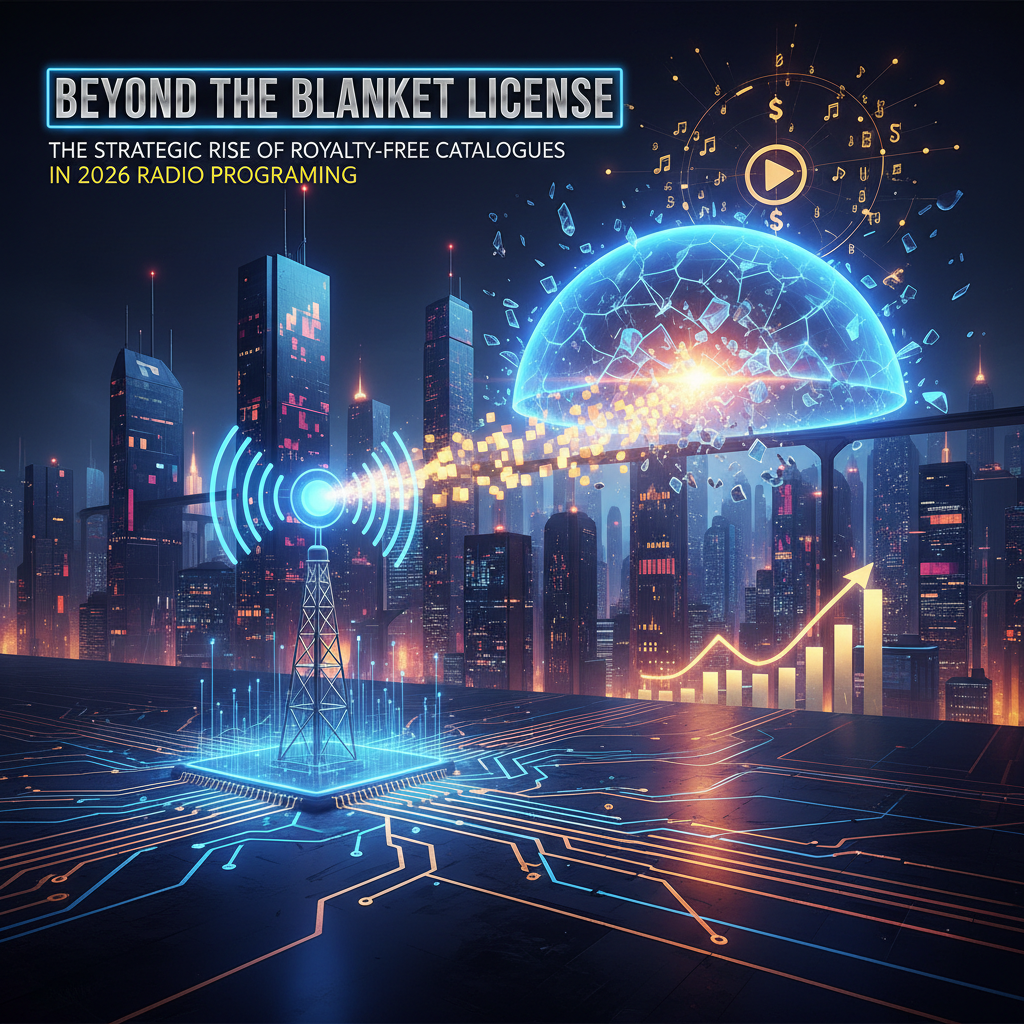
For decades, the financial architecture of independent radio—both terrestrial and digital—was defined by a complex web of Performance Rights Organizations (PROs). Operating a station meant navigating statutory rates, blanket licenses, and quarterly reporting to bodies like ASCAP, BMI, SESAC, and SoundExchange. For major broadcast conglomerates, these expenses were simply part of doing business. For niche digital webcasters, community stations, and hyper-targeted internet operators, royalty payments often represented the single largest operational friction point, occasionally threatening financial viability altogether.
The landscape in 2026 presents a radically different paradigm. While commercial radio continues its relationship with traditional PRO licensing, a quiet revolution has taken hold across independent, digital, and branded internet radio stations. Driven by advances in high-fidelity production, direct-to-creator licensing platforms, and sophisticated metadata automation, "royalty-free" music has evolved from a synonym for generic background audio into a strategic asset for modern station programmers.
The Evolution of the Station Library
Historically, using royalty-free music on the airwaves carried a distinct stigma. Station managers associated non-PRO music with robotic synthesizers, repetitive arrangements, and substandard mixing—audio suited for hold lines, perhaps, but unconvincing as broadcast-grade content.
That dynamic began to shift in the early 2020s as production platforms recognized a growing market: independent online broadcasters, podcast producers with live streams, and commercial brands building bespoke digital radio networks. Rather than relying on public-domain recordings or bargain-bin stock libraries, a new wave of audio platforms began partnering directly with independent composers, session musicians, and electronic producers.
By cutting out traditional publisher intermediaries, these platforms established direct-licensing models. Under this framework, the platform owns or exclusively administers both the master and composition rights, allowing them to grant buyers a comprehensive, perpetual, or subscription-based right to broadcast. Today, in 2026, the sonic threshold between a top-charting commercial track and a premium royalty-free production is virtually indistinguishable to the average listener.
What's Happening Now: The 2026 Royalty-Free Marketplace
The current marketplace is characterized by hyper-specialization, integration with automation software, and robust global rights clearance. Internet radio operators no longer simply download MP3 files to load into automated playout systems; they plug direct-license API feeds directly into broadcast automation platforms like AzuraCast, PlayIt Live, and SoundStation Pro.
Modern catalog providers have responded to the specific needs of radio programmers by offering uncompressed broadcast-grade audio, instrumental stems, tailored station IDs, and pre-cleared commercial synchronization rights. Furthermore, these platforms provide clear digital paper trails—a critical requirement for stations streaming across international borders where regional copyright laws vary wildly.
Here is a look at the leading royalty-free and direct-license sources shaping radio station output in 2026:
* Epidemic Sound (Enterprise & Broadcast Tier): Long the standard for digital video creators, Epidemic has expanded its broadcast infrastructure significantly. Offering over 45,000 tracks alongside a vast sound effects library, its direct-licensing model covers worldwide broadcast rights, eliminating cross-border geo-blocking worries for webcasters. Their system includes stem downloads (drums, bass, melody separately), allowing programmers to create custom station beds and promos.
* Artlist Enterprise: Known for its cinematic aesthetic, Artlist’s expanded corporate and radio tier provides unlimited commercial streaming rights with automated license reporting. Its strength lies in contemporary indie pop, electronic, and ambient genres, making it a favorite for modern urban and lounge-formatted digital stations.
* Audiio Pro: Audiio has distinguished itself by offering highly transparent pricing alongside a boutique, highly curated roster of indie musicians. Rather than boasting sheer volume, Audiio focuses on high-production-value tracks that mirror current commercial radio trends, particularly in indie rock, hip-hop, and modern folk formats.
* Trackstock & Soundstripe for Business: Tailored specifically for commercial installations and retail radio networks, these platforms offer automated playlist creation that complies fully with commercial broadcast law, eliminating traditional background music performance fees entirely.
* Session Direct Networks: A rising trend in 2026, these are decentralised artist collectives offering direct-to-broadcaster subscription models. Stations pay a fixed monthly fee directly to the collective, receiving fresh, non-PRO unreleased tracks while artists retain a predictable revenue stream without third-party administration deductions.
Why It Matters for Stations and Creators
The operational benefits of incorporating high-grade, royalty-free audio extend beyond simple cost savings. For independent internet stations, the primary driver is legal certainty and operational agility.
Standard PRO licensing agreements often come with strict territorial limitations or complex reporting structures based on Aggregate Tuning Hours (ATH). A single misstep in reporting can result in substantial retro-active penalties. Direct-licensed, royalty-free music eliminates this friction. When a station acquires broadcast rights through a direct-license provider, the right to stream globally without secondary reporting is built into the agreement.
"Three years ago, our reporting overhead was eating up nearly fifteen percent of our monthly operating budget," explains Marcus Thorne, Digital Audio Analyst at SoundMetrics Advisory. "By transitioning our station's ambient, chillout, and specialty dayparting blocks to pre-cleared, direct-licensed libraries, we eliminated thousands of hours of manual tracking while cutting our licensing fees by half. More importantly, our audience retention metrics didn't drop by a single percentage point."
For station operators running commercial or branded radio networks—such as streams designed for retail environments, hospitality groups, or corporate campuses— royalty-free catalogues offer a bulletproof shield against performance rights audits. It allows network managers to scale from five streams to five hundred without exponentially compounding licensing costs.
Furthermore, independent musicians benefit from this model through upfront compensation and transparent revenue splits, offering a reliable income stream that circumvents the notoriously slow royalty distribution cycles of traditional collecting societies.
Navigating Rights and Implementation
While the advantages are clear, station programmers must remain diligent when selecting sources. Not all "royalty-free" licenses are created equal, and broadcast rights differ fundamentally from personal or social media licenses.
Programmers must verify that a provider’s license explicitly covers linear broadcast and digital webcasting, rather than just sync rights for on-demand video. Additionally, stations running dual terrestrial and digital feeds must ensure their tier covers traditional RF transmission alongside IP streams. Maintaining a centralized archive of license certificates and metadata logs remains essential practice, ensuring that if a stream is flagged by automated content identification bots on platforms like YouTube or Twitch, quick restoration is guaranteed.
Takeaway
Royalty-free music in 2026 is no longer a budget-constrained compromise for bottom-tier webcasters; it is a sophisticated, strategic tool utilized by forward-thinking station directors. By replacing traditional, opaque licensing frameworks with clear, direct-licensed catalogues for specific dayparts, station beds, and specialized formats, radio operators can achieve financial stability, streamline international compliance, and maintain exceptional audio quality. As the boundary between traditional broadcasting and global digital streaming continues to dissolve, the stations that master these agile content models will be the ones that thrive on the modern dial.