The Sonic Sanctuary: Why Building an Online Radio Station Has Become the Ultimate Creative Refuge
In an era defined by continuous notifications, algorithmic fatigue, and an unrelenting news cycle, digital consumers are increasingly searching for spaces of calm and control. While wellness apps and offline hobbies have their place, an unexpected medium has e
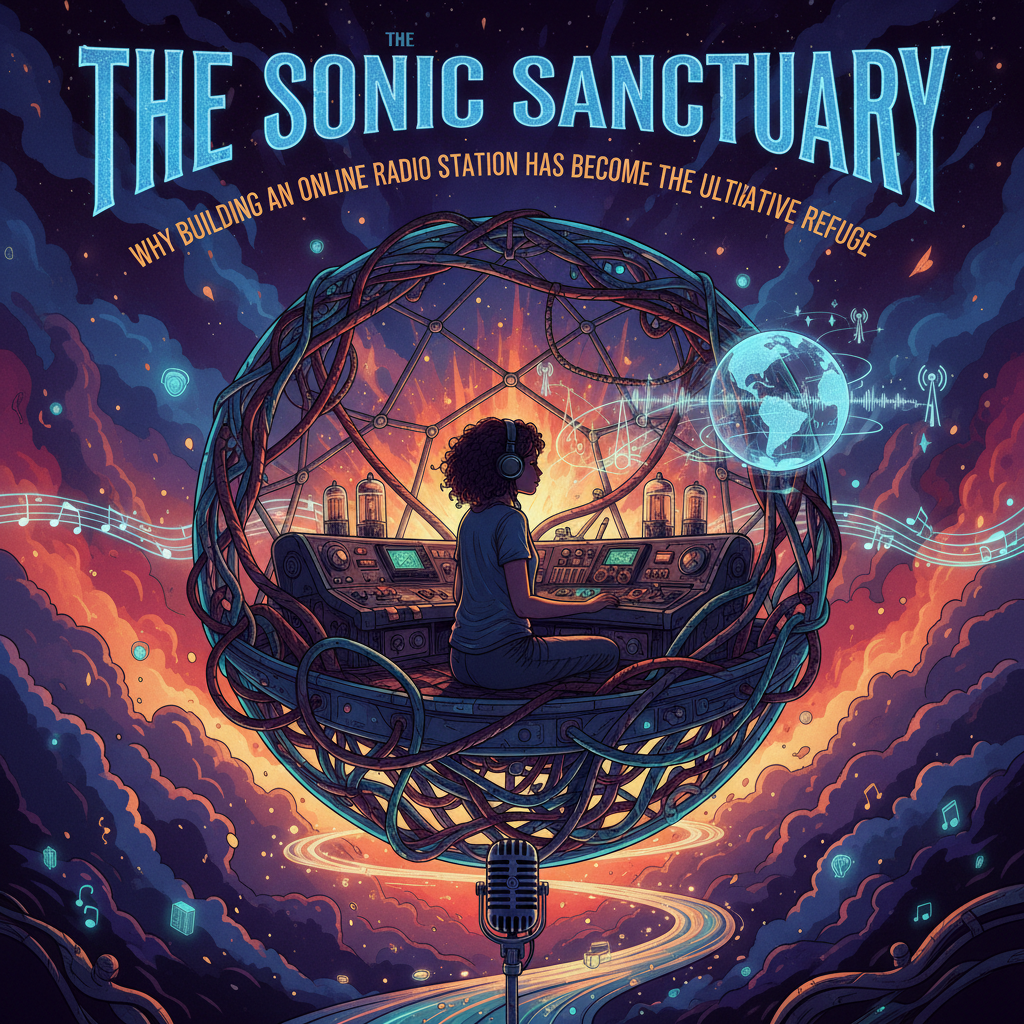
In an era defined by continuous notifications, algorithmic fatigue, and an unrelenting news cycle, digital consumers are increasingly searching for spaces of calm and control. While wellness apps and offline hobbies have their place, an unexpected medium has emerged as a deep source of creative decompression: independent internet radio.
Once the domain of technical hobbyists and commercial enterprises, micro-broadcasting has evolved into a form of modern digital sanctuary. Building and managing an online radio station offers a unique blend of creative control, focus, and low-pressure community building. For creators looking to step away from the transactional nature of social media, launching a broadcast stream provides something rare in contemporary media: a space that is deliberate, linear, and entirely their own.
Background and Context
To understand the current resurgence of personal internet radio, one must examine the shift in how we consume music and spoken word. Over the past decade, streaming platforms transformed music into an infinite, friction-free utility. On-demand access replaced the joy of active discovery, while predictive algorithms prioritized engagement metrics over thematic cohesion.
Simultaneously, social media flattened digital communication into real-time performance. Content creators found themselves on a perpetual treadmill of video clips, shorts, and trend-chasing, leading to widespread creative burnout.
Historically, community radio and pirate broadcasts served as vital outlets for subcultures and alternative voices. Today, modern cloud management software and low-cost streaming infrastructure have democratized that same spirit. What was once a complex assembly of physical mixers, FM transmitters, and licensing hurdles can now be managed via intuitive web interfaces and cloud-based playout systems. As a result, creators are returning to radio not to build media empires, but to reclaim their relationship with sound.
What’s Happening Now
Across the global internet radio landscape, there is a visible swell in hyper-niche, solo-operated web stations. Rather than competing with mainstream commercial stations or massive podcast networks, these independent operators are embracing narrow focus and mood-driven programming.
We see stations dedicated exclusively to late-night ambient textures, obscure 1970s Japanese jazz, modular synthesizer improvisations, or field recordings of rainfall mixed with slow-tempo electronic tracks. The goal is rarely total audience reach; instead, operators focus on creating a consistent atmosphere—a 24/7 sonic shelter for themselves and a like-minded audience.
"We are tracking a clear pivot away from the hyper-optimized, high-stress world of content creation toward low-pressure audio programming," notes Marcus Vance, an audio industry analyst specializing in web syndication. "Creators are discovering that running a linear stream allows them to step back from the performative aspect of modern media. You set up your schedules, refine your library, and let the broadcast flow. It provides a tactile, meditative rhythm that on-demand media simply cannot replicate."
The Art of Curation as Personal Therapy
The act of constructing a broadcast schedule functions as a form of focused mindfulness. Unlike setting up a static playlist on a streaming app, managing a live or automated web radio station requires an understanding of time, transitions, and narrative flow.
Operators spend hours organizing metadata, adjusting crossfade points, selecting station IDs, and structuring rotations for different hours of the day. A morning drive slot demands a different cadence than a midnight chill program. This process forces the creator to slow down, listen closely, and engage with audio on a structural level.
"When I sit down to program my weekly three-hour ambient and modern classical block, my heart rate slows down," says Elena Rostova, station operator of Loom FM, a solo-run online station based in Oregon. "There is no feed to scroll, no comments to react to in real time, and no algorithm demanding I post every six hours. I am just balancing frequencies, matching keys, and pacing a narrative. It is entirely restorative."
The psychological benefit lies in the sense of order. In a world where personal control often feels elusive, a broadcast log offers complete creative sovereignty. The creator decides what plays, when it plays, and how it sounds, free from external editorial or commercial pressure.
Why It Matters for Stations and Creators
For existing media platforms, independent station managers, and solo hobbyists, this movement highlights a critical evolution in digital audio culture. Radio is no longer viewed merely as a distribution channel; it is valued as an experiential design tool.
The low overhead and flexibility of modern cloud broadcasting mean that creators can experiment without financial or operational strain. The benefits of this approach extend across several key dimensions:
* Operational Ease: Cloud-based playout automation handles continuous streaming from anywhere in the world, allowing creators to focus strictly on curation rather than managing local hardware or network uptime.
* Algorithmic Independence: Programmers retain total authority over music rotation, allowing deep-cut exploration and organic pacing without penalty from engagement-driven recommendation engines.
* Intimate Community Building: Rather than chasing vanity metrics, station owners cultivate small, deeply engaged listening communities connected via lightweight web chats or embedded player pages.
* Creative Sovereignty: Web radio offers absolute freedom over station identity, from customized jingles and station IDs to unformatted, long-form audio experiments that exceed standard podcast formats.
For professional media organizations, recognizing this shift offers an opportunity to launch ambient secondary streams or niche offshoots that provide listeners with relaxed, background-friendly alternatives to talk-heavy or high-energy primary programming.
Audio Autonomy in an Overstimulated World
The resurgence of personal radio broadcasting is ultimately a reaction against the noise of the contemporary web. When every app demands immediate visual attention and continuous interaction, linear audio offers an alternative mode of engagement. It sits comfortably in the background, providing texture to daily life without demanding total cognitive bandwidth.
For the creator, building a station changes their relationship with technology. The computer ceases to be a portal for stressful notifications and transforms back into what it was originally meant to be: a tool for human expression. Whether broadcasting to five friends or five thousand global listeners, the act of sending audio out into the digital ether provides a distinct sense of accomplishment and calm.
Takeaway
Creating an online radio station is no longer an enterprise reserved for media corporations or technical experts; it has become one of the most fulfilling, grounding hobbies available in the digital age. By trading the chaotic demands of social media algorithms for the deliberate art of audio curation, creators can build their own sonic sanctuaries. In doing so, they rediscover the quiet joy of continuous music, restore intentionality to their creative lives, and offer both themselves and their listeners a welcome respite from a noisy world.